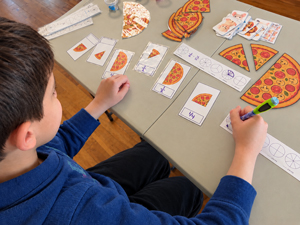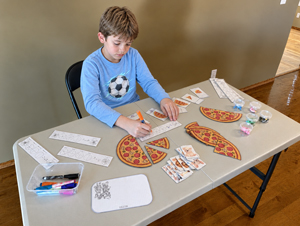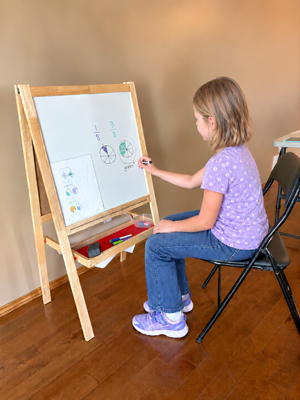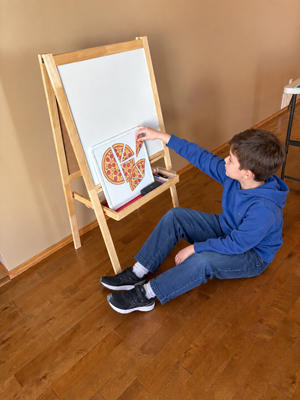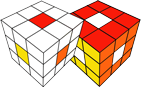
We use manipulatives with elementary school students
...and we sometimes combine with digital exercises (here is an example: fractions).


and more...
We play memory and attention games that are simple but effective.
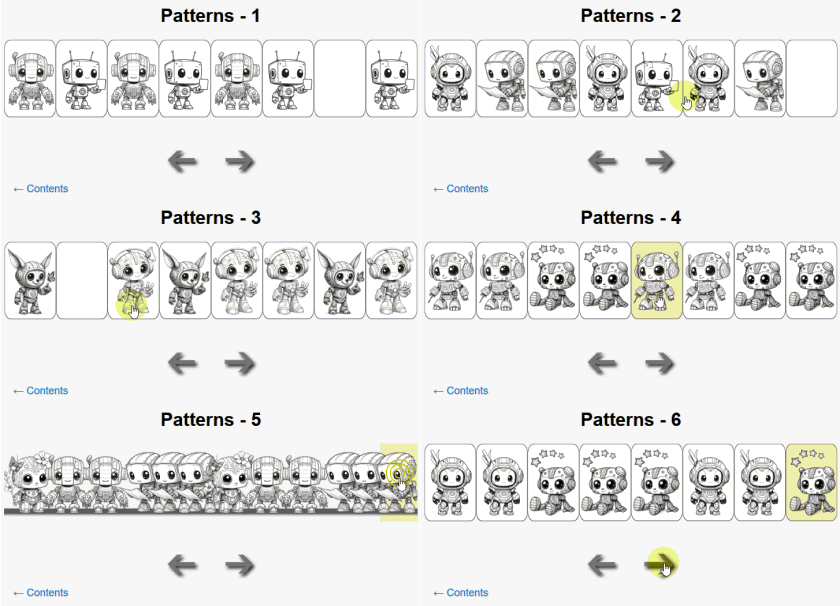
We sometimes begin lessons with a short memory challenge that helps students boot up their attention and engage their pattern recognition and working memory. In the example below the student has to pay attention to arranging the cards exactly according to the two smaller template cards given. The eyes must track back and forth between the two templates and the two arrangements. We can also time the students and have them compete with their previous records to make it more challenging.
Many subjects require the observation of patterns, remembering details, organizing ideas and information recall. For example, chemistry benefits from studying visual arrangements like the Lewis dot diagrams, 3D models, in math we use patterns for tracking formula parameters and so on.
While this inductive start to the lesson is simple on the surface, this task enforces working memory, visual processing, and inductive reasoning, all of which support success in all STEM subjects. The activity also provides a fun, low-stress transition into focused learning for students who benefit from hands-on, interactive activities.
Imagining stories
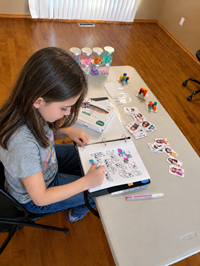
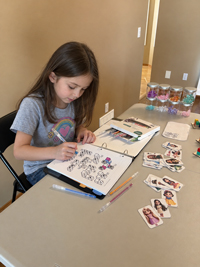
We use specially illustrated cards to help elementary school kids learn how to build great stories. To make a story work, kids need to organize their thoughts and put events in a logical timeline, which they do by arranging the cards in order.
Sometimes, we shake things up by reshuffling the deck and asking them to improvise a brand-new story. This is a fun way to show them how changing the order completely changes how much sense the story makes!
Most storytelling cards you buy in stores just feature a single object. Ours are different. They are packed with rich, elaborate details and busy scenes. Because there is so much happening visually, the kids can't just make up random details, their story has to match what is actually happening on the card. These illustrations are designed to spark deep imagination and truly elevate how kids tell stories.